
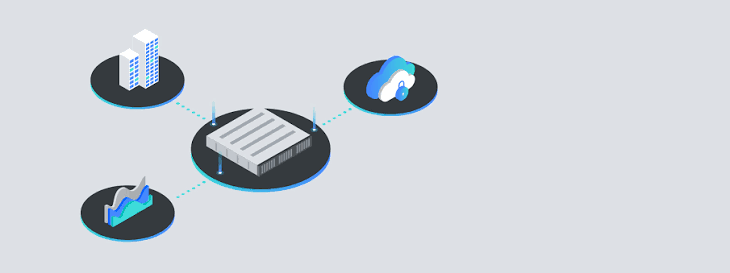
The fundamental difference between edge computing and cloud computing lies in where data processing occurs.
-
Cloud Computing centralizes data processing and storage in massive, remote data centers accessed over the internet.
-
Edge Computing decentralizes data processing by running workloads locally at or near the physical location of the user or device (at the “edge” of the network).
Key Architectural Differences
| Feature | Edge Computing | Cloud Computing |
| Location of Processing | At or near the data source (IoT devices, edge gateways, local micro-data centers) | Centralized, remote hyper-scale data centers (AWS, Azure, GCP) |
| Latency | Extremely low (<1 to 10 milliseconds) | Higher latency (50 to 200+ milliseconds due to network transit) |
| Bandwidth Usage | Low (filters and processes data locally before sending summaries) | High (streams vast amounts of raw data across the internet to the cloud) |
| Offline Operation | High (can operate continuously without internet connectivity) | Low (requires a stable, continuous internet connection) |
| Scalability & Compute | Limited by local hardware constraints | Virtually unlimited compute, storage, and dynamic scaling |
| Primary Use Cases | Autonomous vehicles, industrial IoT, smart grids, AR/VR, robotics | Big data analytics, cloud storage, web apps, training AI models |
Detailed Comparison
1. Latency & Response Speed
-
Edge: Essential for mission-critical applications where delays cause safety or operational hazards. By eliminating the time required for data to travel back and forth to a remote cloud server, edge systems achieve near-instantaneous decision-making.
-
Cloud: Subject to network transit times. While fast enough for standard web applications or video streaming, standard cloud latency is too slow for real-time applications like self-driving car braking systems.
2. Bandwidth & Network Reliance
-
Edge: An industrial plant with thousands of sensors produces terabytes of raw data daily. Edge nodes aggregate and filter this raw data locally, transmitting only important alerts or daily summaries to the cloud, dramatically reducing internet bandwidth costs.
-
Cloud: Requires continuous network connectivity. Transferring raw, high-volume sensor or video feeds directly to the cloud can saturate networks and incur massive data egress costs.
3. Compute & Analytics Power
-
Edge: Suited for lightweight, localized tasks such as running pre-trained Machine Learning inference models or localized signal processing.
-
Cloud: Unmatched in raw processing power. It remains the ideal location for heavy computations, training massive AI models (e.g., LLMs), complex data warehousing, and long-term historical archives.
4. Data Privacy & Security

-
Edge: Keeps sensitive raw data on-site (e.g., patient vital signs or factory video feeds) rather than transmitting it over the public internet, simplifying compliance with privacy regulations. However, physical edge devices can be vulnerable to local tampering.
-
Cloud: Benefits from centralized, enterprise-grade cloud security controls, automated backups, and advanced threat monitoring. However, transmitting data to the cloud exposes a larger network attack surface.
Modern Reality: The Hybrid Edge-Cloud Paradigm
Edge computing does not replace cloud computing—they operate as complementary architectures:
[ IoT / Sensors / Cameras ]
         │ (Raw Data)
         ▼
[ Edge Device / Gateway ]  ──► Executes local real-time decisions (< 5ms latency)
         │ (Aggregated Insights & Anomaly Summaries)
         ▼
[ Centralized Cloud ]       ──► Handles global analytics, ML training, & long-term storage
-
The Edge makes rapid, immediate operational decisions on the ground.
-
The Cloud aggregates data from thousands of edge nodes across the world to train better AI models, run global business logic, and store historical records.