

What is FinOps? Controlling and Optimizing Cloud Costs
FinOps (short for Financial Operations) is an operational framework and cultural practice that brings financial accountability to the variable spend model of cloud computing. It enables engineering, finance, and business teams to collaborate on data-driven spending decisions, ensuring organizations maximize business value rather than just cutting costs.
In traditional IT, procurement teams bought fixed hardware assets (CapEx). In the cloud, engineers spin up resources with a single line of code (OpEx). Without centralized governance, this decentralized spending leads to cloud cost sprawl and unexpected billing shocks.
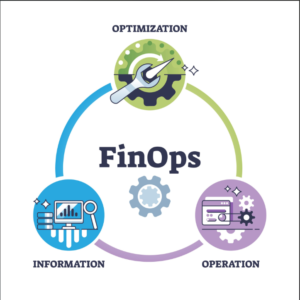
The 3 Phases of the FinOps Lifecycle
FinOps is an iterative, continuous cycle defined by the FinOps Foundation. Organizations continuously progress through three core phases:
+--------------------------------------------------------------------------+
|                         THE FINOPS LIFECYCLE                             |
+--------------------------------------------------------------------------+
|  1. INFORM    --> Gain visibility, allocate costs, and set budgets      |
|  2. OPTIMIZE  --> Identify waste, rightsize resources, leverage discounts|
|  3. OPERATE   --> Automate policies, track KPIs, align teams             |
+--------------------------------------------------------------------------+
1. Inform (Visibility & Allocation)
You cannot optimize what you cannot measure. This phase focuses on mapping cloud spending back to specific business units, products, or engineering teams using tags and resource labels.
-
Cost Allocation: Tagging resources (e.g.,
Environment: Production,Owner: Team-Alpha) to attribute spending accurately. -
Benchmarking & Anomaly Detection: Real-time visibility into cost spikes so unexpected usage is flagged immediately rather than at month-end.
2. Optimize (Rate & Usage Reduction)
Once costs are transparent, organizations target waste reduction across two fronts:
-
Usage Optimization (Rightsizing): Downsizing over-provisioned virtual instances, terminating idle storage volumes, and shifting workloads to serverless runtimes.
-
Rate Optimization: Purchasing committed-use discounts (such as AWS Savings Plans, Azure Reserved Instances, or GCP Committed Use Discounts) to lower the per-unit cost of baseline compute workloads.
3. Operate (Continuous Governance)
FinOps is not a one-time cleanup project; it is an ongoing cultural habit embedded in everyday engineering workflows.
-
Automated Guardrails: Setting automated budget alerts and policy enforcement (e.g., auto-shutting down development servers outside working hours).
-
Unit Economics: Tracking business-aligned metrics like Cost per Active User or Cost per Transaction instead of total overall spend.
FinOps Core Principles
To successfully execute FinOps across an enterprise, organizations align around key cultural principles:
-
Teams Need to Own Their Cloud Usage: Engineers view cost as a primary quality metric alongside speed, uptime, and security.
-
A Centralized Team Drives FinOps: A dedicated FinOps practitioner group manages commitment plans, vendor negotiations, and governance rules while enabling distributed teams.
-
Decisions Are Driven by Business Value: Spending more on the cloud is acceptable if it yields a higher return on investment (ROI) or accelerates time-to-market.
Key Strategies for Cloud Cost Reduction
| Strategy | Area Focus | Impact |
| Rightsizing | Compute & Storage | Downsize idle or underutilized VM instances to match actual CPU/RAM demand. |
| Commitment Discounts | Billing Rates | Commit to 1- or 3-year compute terms to secure up to 60-70% discounts. |
| Storage Lifecycle Policies | Object Storage | Move older data automatically to cold archival tiers (e.g., AWS S3 Glacier). |
| Spot/Preemptible Instances | Fault-Tolerant Compute | Leverage spare cloud capacity for batch jobs at up to an 80-90% discount. |
| Cleanup of Orphaned Assets | Storage & IP Addresses | Delete unattached storage volumes (EBS/Managed Disks) and unused elastic IPs. |