

Among all cloud network expenses, data egress fees—the charges incurred when moving data out of a cloud provider or across regional networks—are among the most difficult to predict and control.
While public cloud providers (AWS, Azure, GCP) encourage data ingestion by offering free data ingress, outbound data transfers carry per-gigabyte rates that can scale exponentially as microservices, multi-cloud setups, and external user bases grow.
1. The Anatomy of Data Transfer Costs
Understanding how data moves through your cloud architecture is essential to identifying where egress charges occur.
+--------------------------------------------------------------------------+
|                       DATA TRANSFER PRICING LAYERS                       |
+--------------------------------------------------------------------------+
|  INGRESS      --> Data moving INTO the cloud          (FREE)             |
|  INTRA-AZ     --> Data within the SAME Availability Zone (Usually FREE)  |
|  INTER-AZ     --> Data moving BETWEEN Availability Zones ($ / GB)        |
|  INTER-REGION --> Data moving BETWEEN Cloud Regions      ($$ / GB)       |
|  EGRESS       --> Data moving OUT to Internet / On-Prem  ($$$ / GB)      |
+--------------------------------------------------------------------------+
Free vs. Charged Data Movements
-
Inbound Data Transfer (Ingress): Uploading files to object storage (AWS S3, Azure Blob, GCS) or sending API requests into virtual networks is almost universally free.
-
Same Availability Zone Traffic: Private internal communication between virtual machines or container pods within the same Availability Zone (AZ) typically incurs zero network transfer charges.
-
Cross-AZ Traffic (Inter-AZ): Sending data between different AZs inside the same cloud region (e.g., replicating database writes across redundant zones for high availability) incurs a per-GB charge in both directions (egress from Zone A and ingress to Zone B).
-
Cross-Region Traffic (Inter-Region): Syncing backups or maintaining active-active disaster recovery setups across geographically separate cloud regions carries higher per-GB fees.
-
Internet Egress: Transferring data from a cloud region out to external end-users, on-premises data centers, or third-party SaaS vendors incurs the highest per-GB tier rates.
2. Common Scenarios That Cause Egress “Bill Shock”
                  +--------------------------------------+
                  |      COMMON EGRESS COST DRIVERS      |
                  +--------------------------------------+
                                     |
       +-----------------------------+-----------------------------+
       |                                                           |
       v                                                           v
[ ARCHITECTURAL OVERHEAD ]                                  [ PUBLIC NETWORK ROUTING ]
* Uncompressed cross-region backups                         * NAT Gateway data processing fees
* High-frequency multi-cloud API queries                    * Database calls traversing the public internet
* Microservices spread across multiple AZs                  * Bypassing CDN caching layer for static assets
1. High-Volume Cross-Region Backups
Replicating uncompressed database snapshots or massive block storage volumes daily from a primary region to a secondary disaster recovery region accumulates substantial monthly egress charges.
2. Over-Reliance on Managed NAT Gateways
Routing private subnet outbound traffic (such as downloading software patches or external API calls) through managed cloud NAT Gateways (e.g., AWS NAT Gateway) incurs two charges: an hourly gateway fee plus a per-GB data processing charge, compounding overall egress costs.
3. Multi-Cloud and Hybrid Architecture
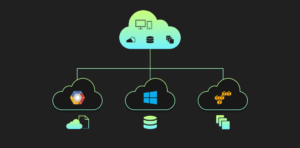
Operating workloads in a hybrid setup (e.g., app servers in AWS pulling data from an on-premises database) or splitting services across AWS and Azure forces continuous cross-vendor data transfer over public networks.
4. Serving Static Media Directly from Storage
Serving videos, images, or large downloadable assets directly to web clients straight out of cloud object storage (S3/Blob) exposes your billing directly to raw internet egress rates.
3. Data Transfer Cost Matrix Across Major Scenarios
| Data Transfer Type | AWS Average Rate | Azure Average Rate | GCP Average Rate | Cost Impact |
| Data Ingress | Free | Free | Free | None |
| Cross-AZ Transfer | ~$0.01 per GB | ~$0.01 per GB | ~$0.01 per GB | Low to Moderate |
| Cross-Region Transfer | ~$0.02 – $0.09 per GB | ~$0.02 – $0.08 per GB | ~$0.02 – $0.08 per GB | Moderate |
| Internet Egress | ~$0.09 per GB (first 10TB) | ~$0.087 per GB (first 10TB) | ~$0.12 per GB (first 10TB) | High |
| Dedicated Direct Connection | DirectConnect (~$0.02/GB) | ExpressRoute (~$0.025/GB) | Partner Interconnect (~$0.02/GB) | Significantly Reduced |
4. Key Strategies to Reduce and Prevent Egress Costs
+--------------------------------------------------------------------------+
|                     EGRESS COST MITIGATION PIPELINE                     |
+--------------------------------------------------------------------------+
| 1. EDGE CACHING      --> Route static traffic through CDNs (CloudFront)  |
| 2. PRIVATE ENDPOINTS --> Keep internal traffic off public internet (VPC)  |
| 3. COMPRESSION       --> Compress logs and payloads before transfer       |
| 4. DIRECT CONNECTIONS--> Deploy Dedicated DirectConnect / ExpressRoute    |
+--------------------------------------------------------------------------+
1. Deploy Content Delivery Networks (CDNs)
Place a global CDN—such as Amazon CloudFront, Azure CDN, or Cloudflare—in front of static storage buckets and web servers.
-
Why it works: CDNs serve cached content from edge locations closest to end-users. Cloud providers offer substantially lower egress pricing (or zero egress fees from storage to native CDNs) compared to direct-from-bucket transfers.
2. Implement Private VPC Endpoints (PrivateLink)
Replace public internet routes for internal cloud service calls with private network endpoints (e.g., AWS VPC Endpoints / Azure Private Link).
-
Why it works: Keeps traffic bound for native services (like DynamoDB, S3, or Key Vault) entirely inside the cloud provider’s internal backbone, eliminating public internet routing fees and reducing NAT Gateway processing charges.
3. Co-Locate Interdependent Services in the Same AZ
When designing microservice communication or database reader/writer clusters, use placement groups or co-locate tightly coupled services within the same Availability Zone whenever strict multi-AZ fault tolerance is not required for that tier.
4. Compress and Batch Data Payloads
Before transferring logs to central SIEM systems or sending analytical data between cloud regions, enforce compression (e.g.,
Gzip, Snappy, Parquet).-
Why it works: Reducing payload size by 60% directly cuts your billed data transfer volume by 60%.
5. Utilize Dedicated Cloud Interconnects for Hybrid Setups
For enterprise hybrid cloud or multi-cloud environments moving multi-terabyte data streams daily, replace internet-based VPN tunnels with dedicated physical cross-connects (AWS Direct Connect, Azure ExpressRoute, or GCP Cloud Interconnect).
-
Why it works: Dedicated connections offer vastly lower per-GB egress rates (up to 60–80% savings compared to standard internet egress) alongside predictable network performance.